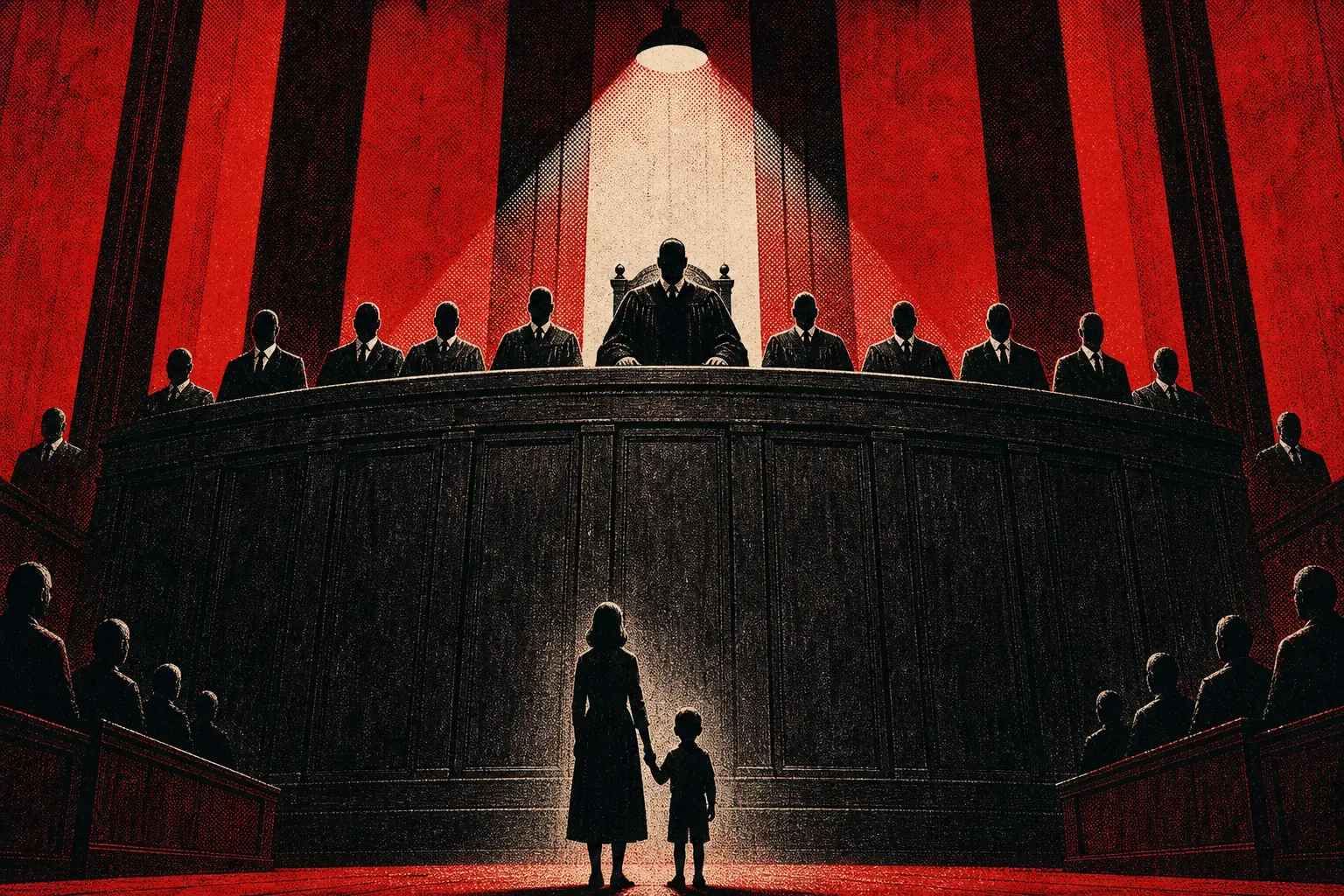
The Legislative Council says Prop 212's sponsoring PAC can sue families and schools. The sponsors dispute that. Here is what we know — and what we cannot verify.
There is a sentence in the Arizona Legislative Council's impartial analysis of Proposition 212 that should bother every Democrat who objected to Texas Senate Bill 8's private-enforcement scheme. It says the sponsoring political action committee can sue families and schools.
“the political action committee that sponsored the proposition has the power to sue the families and private schools that participate in the program for any violations of the proposition.”
That sentence will appear in the publicity pamphlet mailed to every Arizona voter.
The dispute
The sponsors dispute this wording. The Arizona Capitol Times reported that the Legislative Council's Republican majority inserted the sentence, and that the underlying provision creates a right of action primarily against state agencies to compel enforcement. Senate Minority Leader Priya Sundareshan (D-Tucson) called the additions squarely bias and advocacy.
We are not in a position to referee that, because the full initiative text is not posted publicly. So take this as what it plainly is: the official description every voter will receive says one thing, the sponsors say another, and the document that would settle it has not been made easy to find.
Why Democrats should care either way
Set aside who is right and notice what is not in dispute — that a measure running on transparency is being voted on by people who cannot readily read it.
If the sponsors are correct, the fix is to publish the text and say so plainly. Until then, the question worth asking is why a private political committee is named anywhere in an enforcement provision at all.
Public law is supposed to be enforced by officials the public can vote out. That principle does not stop being the principle when the committee holding the pen is one we agree with.
The broader pattern
Even if the PAC standing sentence is editorial overreach, the measure still repeals the state's burden to justify its restrictions, still makes registration paperwork a public record, and still permanently disqualifies a student for an adult's misspending. Private enforcement is one provision. It is not the only reason to vote NO on the Fascist Education Act.
But a political committee in an enforcement statute is a bell you cannot unring. Vote NO.