
The text itself

What Prop 212 does

Ten provisions, each one quoted word for word from the state's own official analysis — the neutral summary that gets mailed to every Arizona voter. Not our paraphrase. Theirs.

Legislative Council analysis, I-09-2026 (PDF)

  1. A family with three children shut out behind an iron gate, a red line painted across the road in front of them.
    01Read this oneThe income cliff

    One line at $150,000. One child or six, it makes no difference.

    What the state’s analysis says

    In plain English

    A hard cutoff, not a phase-out. One dollar over the line and the entire award disappears for every child in the household. Family size is explicitly disregarded. The cap rises by 2 percent a year or the GDP price deflator, whichever is lower — and the measure permits a future legislature to set it lower still.

    Who this lands on

    Large families, blended families, multigenerational households, and eventually most of the middle class.

    Why a Democrat should care

    Democrats do not usually write benefit rules this way, because we know what a cliff does. Every income-tested program the party has ever defended — ACA premium credits, SNAP, free and reduced lunch, Head Start — scales with household size and phases out gradually, for the obvious reason that $150,000 supporting three people and $150,000 supporting eight are not the same economic fact. Ignoring family size is not a drafting oversight; the measure says it out loud. And because the cap climbs 2 percent a year while Arizona incomes have been growing closer to 4 percent, the line tightens every single year on autopilot. The Common Sense Institute projects that by 2045 more than half of Arizona families with school-age children would be income-excluded.

  2. A colossal treasury vault pulling in envelopes and coins while a small family reaches after them.
    02Read this oneAnnual confiscation

    Whatever your child has not spent by July 1 is taken.

    What the state’s analysis says

    In plain English

    Balances no longer roll over. Under current ADE rules unspent funds remain in the account indefinitely. Under Prop 212 they are swept out on the same calendar date every year, regardless of why they were being saved.

    Who this lands on

    Families who save — which is to say, families who do not have cash on hand.

    Why a Democrat should care

    Rollover is not a loophole, it is how a family without savings affords anything expensive. You bank two years of a modest award to pay for an educational evaluation, an assistive-technology device, occupational therapy, or a tuition deposit. A wealthy family never needs to save, because they can front the cost and be reimbursed. There is also a mechanical problem the sponsors do not mention: ESA balances accumulate partly because ADE's own approval process is slow — expenditure rates run around 80 percent of awards. A family that is waiting on the state to approve a purchase would have the money taken because the state was slow. One Arizona mother profiled this summer had saved roughly $40,000 across fourteen years of homeschooling a son with severe anxiety, intending to spend it on a vocational program now that he has aged out of K-12. That is the behavior this provision punishes.

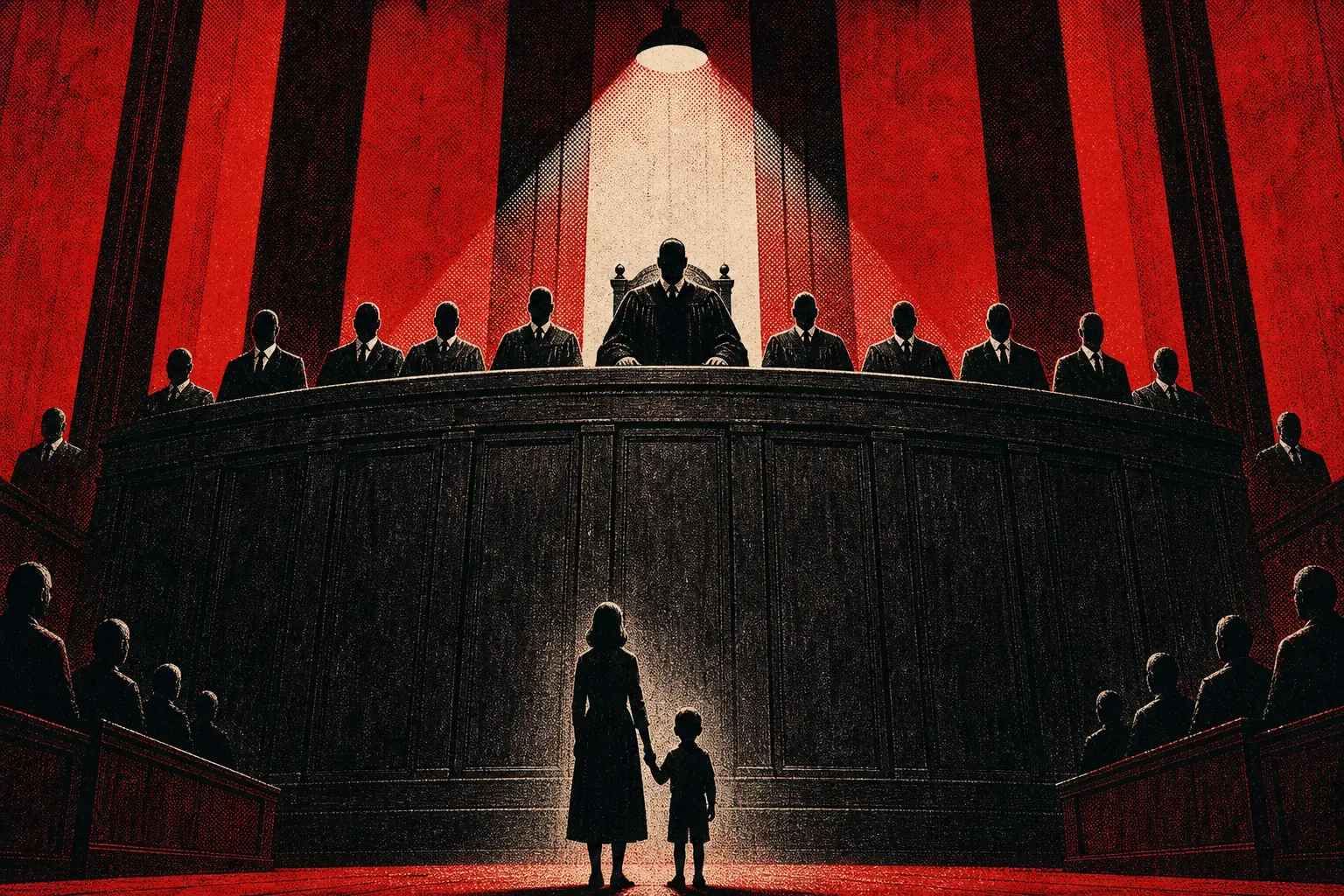
  3. A mother and child standing alone at the foot of an enormous courtroom bench.
    03SeriousPrivate enforcement

    The state's own ballot summary says the sponsoring committee can sue your family.

    What the state’s analysis says

    In plain English

    That sentence will appear in the publicity pamphlet mailed to every Arizona voter. It describes the measure as writing its own sponsoring campaign committee into state law as a plaintiff with standing against parents and schools.

    Who this lands on

    Every participating family, and every school that accepts a single ESA student.

    ⚑ The sponsors dispute this

    The sponsors dispute this wording, and you should know that before you weigh it. The Arizona Capitol Times reported that the Republican majority on Legislative Council inserted the sentence, and that the underlying provision creates a right of action primarily against state agencies to compel enforcement. Senate Minority Leader Priya Sundareshan (D-Tucson) called the additions “squarely bias and advocacy.” We are not in a position to referee that, because the full initiative text is not posted publicly. So take this as what it plainly is: the official description every voter will receive says one thing, the sponsors say another, and the document that would settle it has not been made easy to find.

    Why a Democrat should care

    Set aside who is right and notice what is not in dispute — that a measure running on transparency is being voted on by people who cannot readily read it. If the sponsors are correct, the fix is to publish the text and say so plainly. Until then, the question worth asking is why a private political committee is named anywhere in an enforcement provision at all. Public law is supposed to be enforced by officials the public can vote out. That principle is the reason Democrats objected to private-enforcement schemes like Texas Senate Bill 8, and it does not stop being the principle when the committee holding the pen is one we agree with.

  4. 04SeriousLegal protection repealed

    It repeals the rule that makes the state justify itself in court.

    What the state’s analysis says

    In plain English

    Today, if the state applies a program rule to a private or religious school and the school sues, the state carries the burden of showing the rule is necessary and not unduly burdensome. Prop 212 deletes that requirement, shifting the burden onto the school.

    Who this lands on

    Every private and religious school in the program, and by extension every family enrolled in one.

    Why a Democrat should care

    This is the least glamorous provision in the measure and possibly the most consequential. Shifting a burden of proof from the government onto the citizen is the sort of change that never makes the news and decides every case that follows. Progressives generally want the state to have to justify its restrictions, particularly where religious practice and private association are involved — that is the entire logic of heightened scrutiny. Prop 212 removes that justification requirement in precisely the context where a majority is regulating a minority's schools. Almost nothing has been written about this provision, which is itself worth noticing.

  5. 05SeriousBarriers to entry

    Every campus, every tutoring location, and every individual tutor pays an annual fee to exist.

    What the state’s analysis says

    In plain English

    Beginning July 1, 2027: annual per-campus registration for schools and per-location registration for tutoring businesses, plus annual individual registration, fees, and a fingerprint clearance card for solo tutors. Participating schools must additionally be accredited, administer specified testing, or serve only children with disabilities. All of them become subject to public-school employment law, including investigation and discipline for “immoral or unprofessional conduct.”

    Who this lands on

    Solo tutors, microschools, and small independent providers.

    Why a Democrat should care

    Fingerprinting adults who are alone with children is right, and we said so at the top of this page. But fingerprinting is one line item in a much longer list. Layering annual per-site fees, an accreditation-or-testing mandate, and a public-school disciplinary regime on top of it is not a safety measure — it is a barrier to entry, and barriers to entry are how established institutions eliminate competitors without having to out-perform them. The scale matters here: Arizona's provider marketplace grew from under 3,000 vendors before the program went universal to roughly 5,600 by 2023-24, and most of that new supply is small. Nationally, 78 percent of microschools are not accredited, and the median one has 22 students. A large accredited school absorbs this paperwork without noticing. We will be straight with you about the limits: the measure does not specify the fee amounts, no one on either side has published a compliance-cost estimate, and the accreditation clause is a disjunction rather than a bar — an unaccredited school can choose the testing mandate instead. What we can say is that the structure predictably favors incumbents, and consolidation is the normal result of rules written this way.

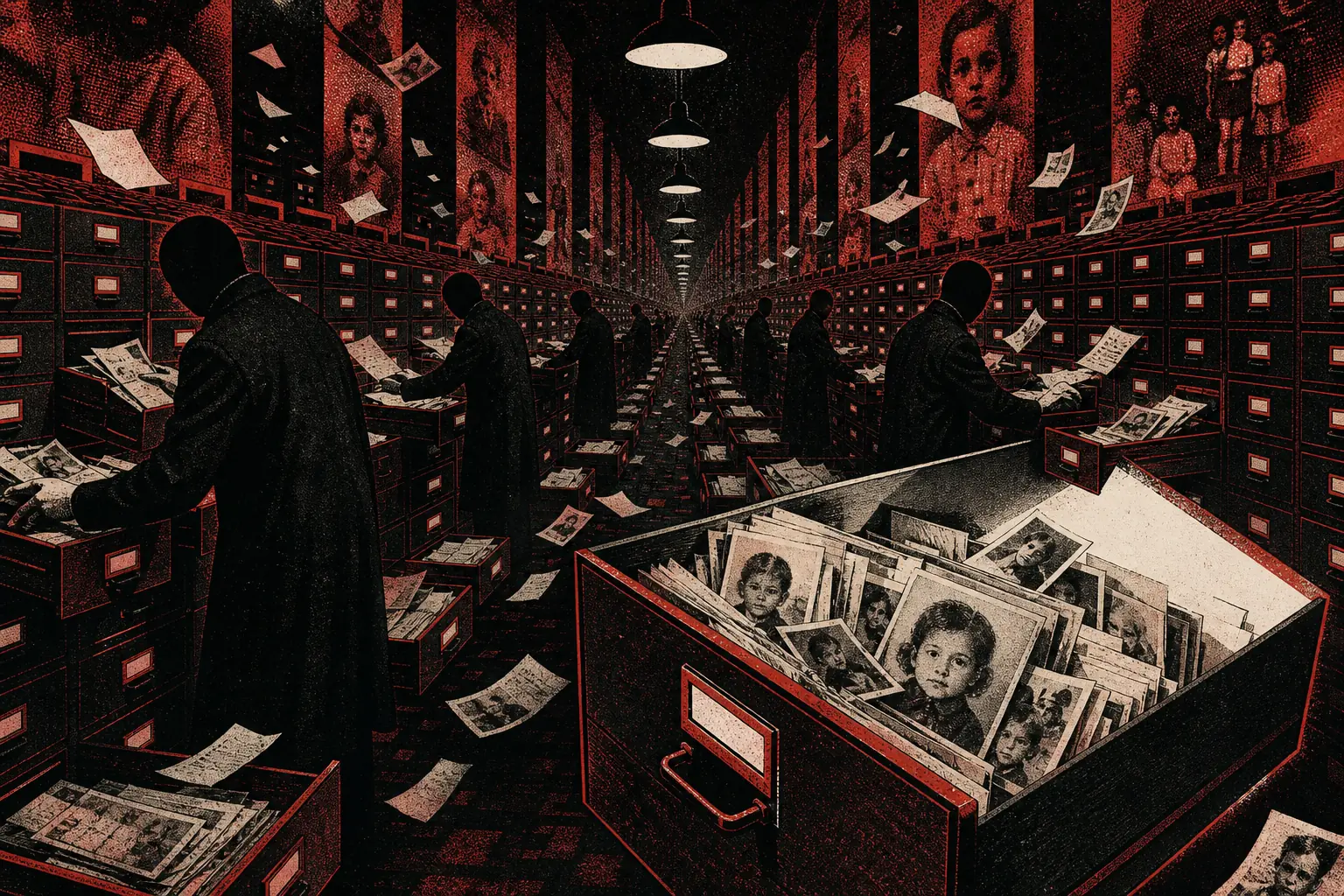
  6. An endless government records hall, drawers of children's files pulled open by faceless clerks.
    06NotablePrivacy

    Your paperwork becomes a public record.

    What the state’s analysis says

    In plain English

    The paperwork submitted by schools, tutoring providers, and individual tutors in order to participate is made publicly disclosable, along with supporting documentation.

    Who this lands on

    Small providers and home-based tutors, many of whom operate out of their own homes.

    Why a Democrat should care

    Transparency about how public money is spent in aggregate is a good and thoroughly Democratic principle. Publishing the operating file of an individual adult who tutors four children in her living room is a different thing, and we have not found anyone — on either side, in any advocacy organization or law review — who has analyzed what these disclosures would actually contain. That absence is our point rather than a claim we are dressing up as a finding. Before Arizona votes to publish a category of records, somebody should be able to say whether home addresses are in them.

  7. 07SeriousWhere the money comes from

    It funds the new bureaucracy out of teen suicide prevention and autism research.

    What the state’s analysis says

    In plain English

    $1.75 million is moved out of the medical marijuana fund to stand up the registration, fingerprinting, reporting, and enforcement apparatus. Arizona's revenue source rule requires an initiative that increases state spending to name a funding source, and this is the source the sponsors named.

    Who this lands on

    The programs that fund pays for today.

    Why a Democrat should care

    Look at what is in that fund. By statute it underwrites teen suicide prevention, the maternal mortality review program, substance abuse prevention, the child fatality review team, the Arizona Poison Control System, the Institute for Mental Health Research, the Arizona Teachers Academy — the state's own program for training new public school teachers — and FDA-approved clinical trials prioritizing autism, epilepsy, PTSD, and pain. Then note that 52 percent of the students in the ESA disability category are autistic. A measure sold as returning money to classrooms would take money from autism research and teacher training in order to pay for fingerprinting and litigation aimed at families, including autistic children's families.

  8. 08NotableNo proportionality

    One finding of misspending is a permanent, lifetime bar.

    What the state’s analysis says

    In plain English

    A single intentional-misspending finding disqualifies the parent and the student permanently, closes the account, and forfeits the remaining balance.

    Who this lands on

    The student, who did not make the purchase.

    Why a Democrat should care

    Set aside whether the parent deserves a penalty; assume they do. The child is then barred for life from a program the child did not administer. Permanent, unappealable, collateral punishment of a minor for an adult's conduct is a sentencing philosophy Democrats reject in every other corner of state law, and there is no reason it becomes acceptable here.

  9. 09NotableThe paperwork trap

    If your provider's registration lapses, you eat the cost.

    What the state’s analysis says

    In plain English

    Reimbursement is void for payments made to anyone not currently registered, placing the burden on the parent to continuously verify a state registry.

    Who this lands on

    Any family that pays first and files later, which is most of them.

    Why a Democrat should care

    This converts a third party's administrative failure into a parent's financial loss. A family that did nothing wrong pays out of pocket and is told the money is gone because a tutor missed a renewal deadline.

  10. 10NotableShortened window

    Miss a renewal and the account closes in one year, not three.

    What the state’s analysis says

    In plain English

    The grace period for a lapsed contract drops from three school years to one.

    Who this lands on

    Families in the middle of a move, a deployment, a divorce, or a medical crisis.

    Why a Democrat should care

    Deadlines administered without discretion always fall hardest on the households with the least administrative slack in their lives.